300 higher ed leaders came to Vineyard 2026 to see how AI is already at work on campuses like theirs, and many left with more than notes. One attendee was already texting a specific plan to their leadership and enrollment teams before the weekend was over, "so that they're knowing what I'm already thinking about here, so we can have those conversations when I get back to campus."
That urgency showed up again and again, but so did a caution against treating AI as an all-or-nothing initiative.
Why does starting small matter more than starting fast?
"What you have to do is you have to start somewhere," one attendee said. "Even if it's a pilot program, you have to get your foot wet, dip it in the water, and then you go from there. I'm all about diving in." Another framed the hesitation that comes before that first step as an asset rather than an obstacle: "I think a little bit of fear is good if it's not paralyzing, because what it does is make you diligent. Holding on to that, and understanding we're still going to move forward, is how you make progress."
Why isn't AI framed as a threat to jobs?
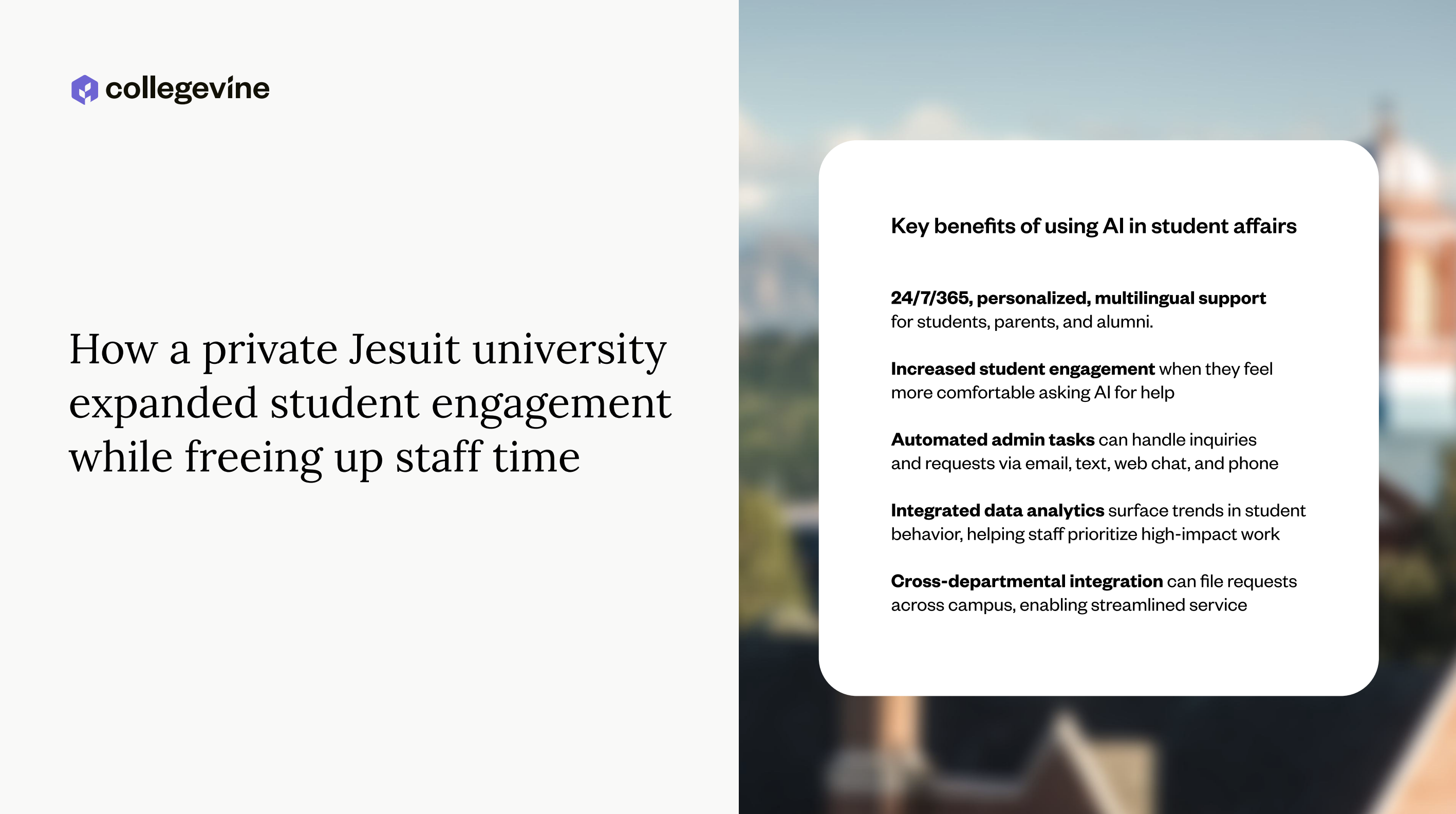
Attendees were consistent on this point. "AI is not meant to replace jobs. It's meant to enhance," one said. "It's meant to free up your hands to do something else in your department." Another described it as "an enhancer" with "the capability to take us further and farther," one that's "scalable" and "available for everyone." Looking six months out, one attendee's hope was specific: that staff and faculty "feel some kind of advantage" and are "spending time on things that only they uniquely can get done." As another put it, "I hope AI allows higher education to prioritize the human element of the work we do."









.png)
.png)


.png)