
Barry University is built around an integrated student success model: every student gets a CASA coach, with a faculty mentoring model launching this fall.
But answering one academic question meant pulling from the student information system, course catalogs, degree requirements, transfer evaluations, and whatever lived in an advisor's head. Coaches spent their appointment time confirming where a student stood, not coaching them on goal setting or self-advocacy.
Advising time was stuck on verification instead of coaching
"When we admit a student, we are committing to intentionally design experiences so they receive the right support at the right time by the right person," said Dr. Elisa Giordano, AVP of Student Success at Barry University.
That commitment was hard to keep when course substitutions and exceptions were interpreted case by case. The same request could be approved by one advisor and escalated or denied by another, depending on who a student happened to sit with.
Two sources mapped to one layer
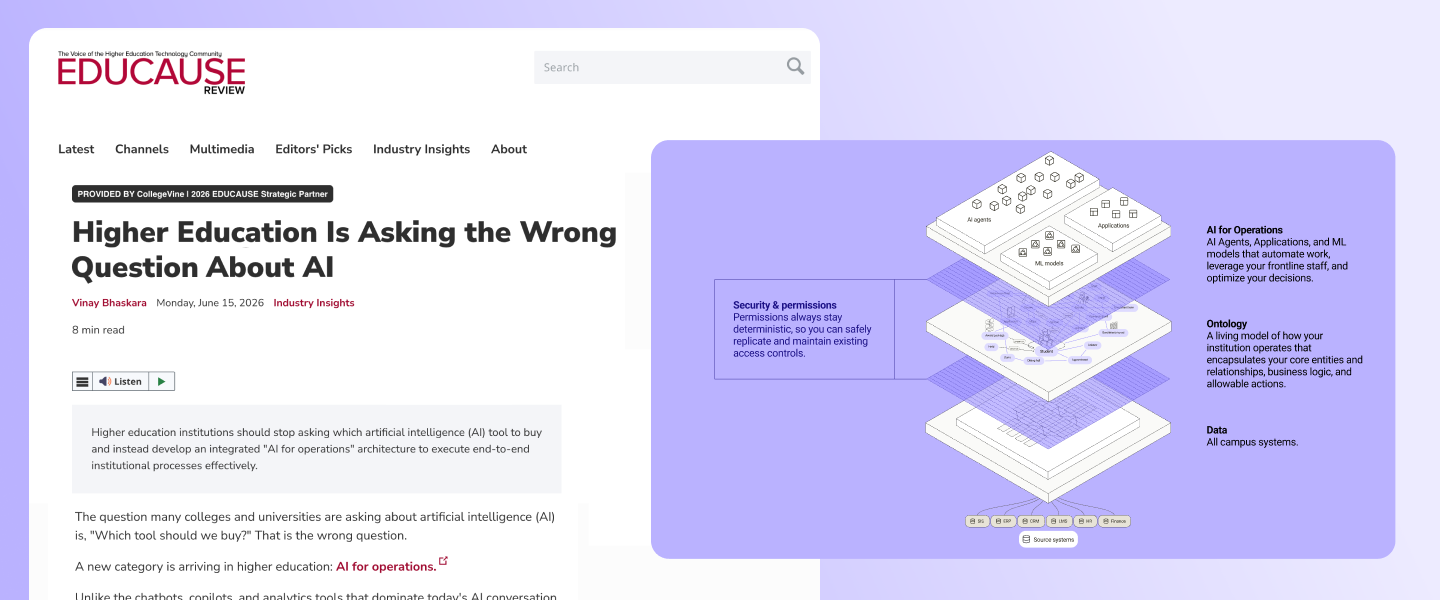
Barry's student records live in Colleague. Its program requirements lived across 6 PDF course catalogs and 2-year advising docs. CollegeVine ingested and normalized both, mapped them to a shared semantic layer, and applied Barry's program rules against every student's coursework.
The output is a degree audit now live across 2,566 students and 6 mapped catalogs, giving Barry one source of truth and a consistent set of program rules that don't change depending on the advisor.
Adrian, now with the same knowledge on the audit
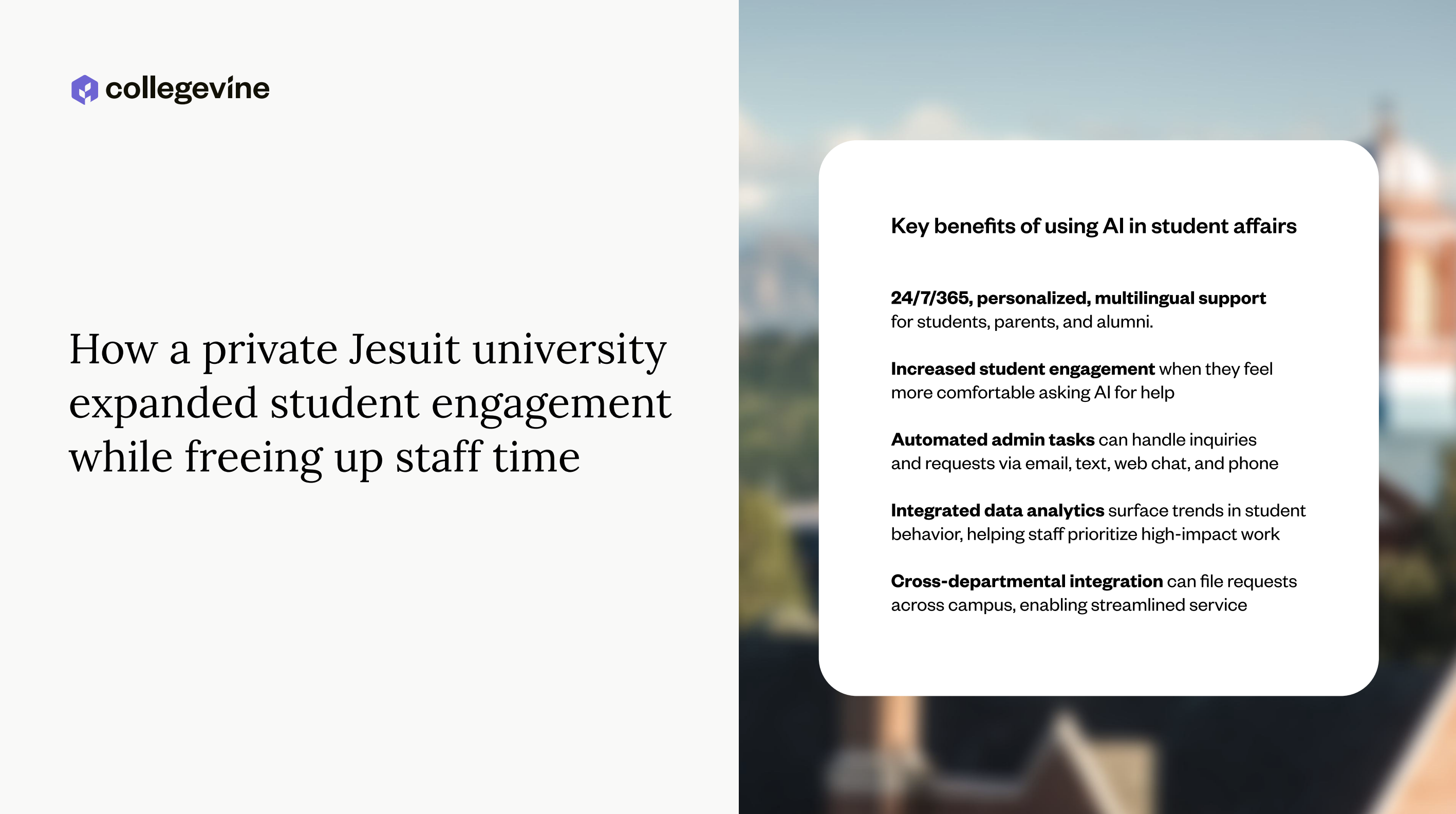
Adrian, Barry's AI one-stop agent, has been live for months over email, SMS, phone, and webchat. With the semantic layer underneath her, she can now name the exact credits standing between a student and on-time graduation, and book the coaching appointment in the same conversation.
Building stronger support for the student
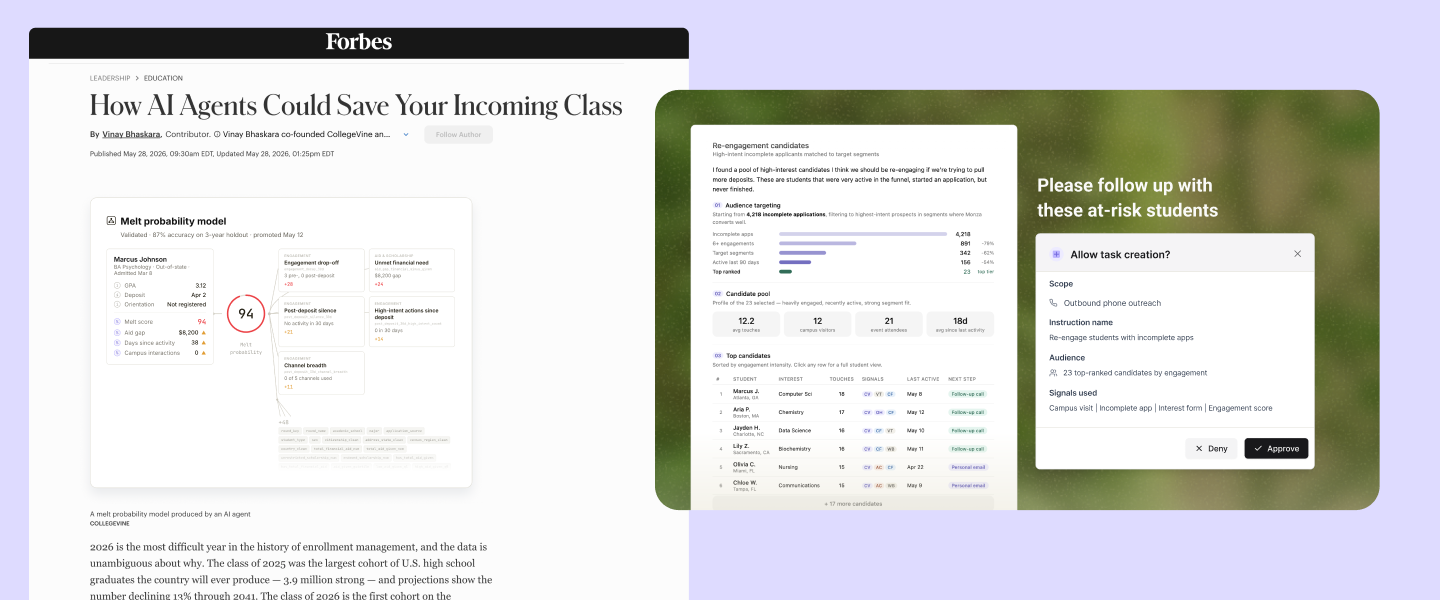
The degree audit is the first project built on Barry's semantic layer. Barry and CollegeVine are already scoping what comes next: predictive coaching support that routes risk signals to coaches before a student falls behind, and a faculty mentoring model launching this fall with every mentor working from the same academic record.
"Technology doesn't transform student success. People do," Giordano said. "The technology gives us the intelligence to make those human connections earlier and more intentionally."






.png)
.png)


.png)